Accessibility Statement for Deep Cleaning Services
Site Accessibility Policy — Deep Clean Accessibility
Browser title: Deep-Cleaning Accessibility and Standards
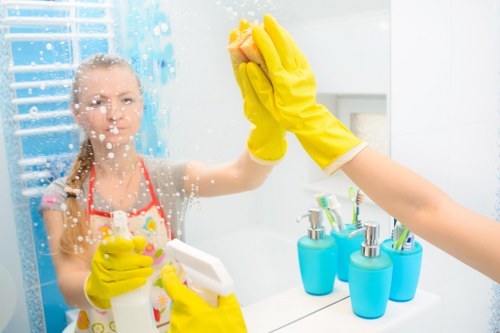
![In a brightly lit residential bathroom, a woman with light-colored hair pulled back, wearing a colourful apron featuring a pink flamingo, stands in front of a white bathroom mirror. She is holding a white spray bottle in her right hand, wearing yellow rubber gloves, and appears attentive as if preparing to clean. In the foreground, another person's arm is visible, also wearing yellow rubber gloves, holding a white cleaning spray dispenser aimed towards the mirror. The bathroom countertop is visible with several blue toothbrush holders containing toothbrushes, reflecting a clean and organized space. The background features a glass shower enclosure and a window with blue and white striped blinds, allowing natural light to brighten the interior. The overall scene depicts a professional cleaning service in progress within a modern, well-maintained bathroom, emphasizing cleanliness and attention to detail, subtly linking to local residential cleaning services in the area near [TOWN] and postcode [POSTCODE].](/pub/_photos/cleaning/f1213216552.jpg) Our commitment to inclusive, accessible deep cleaning information is central to how we present services and resources. This Accessibility Statement explains how our content about deep-cleaning procedures and site features meets accessibility standards and what we are doing to improve access for everyone.
Our commitment to inclusive, accessible deep cleaning information is central to how we present services and resources. This Accessibility Statement explains how our content about deep-cleaning procedures and site features meets accessibility standards and what we are doing to improve access for everyone.
We aim to follow the Web Content Accessibility Guidelines (WCAG) 2.1 at the AA level across our published materials on deep clean processes, safety, and scheduling. That means we prioritize perceivable, operable, understandable, and robust content so visitors with diverse abilities can access our deep cleans guidance.
 Key areas covered include text alternatives for non-text content, clear structure and headings, sufficient color contrast, and adaptable layouts so information about intensive cleaning services remains usable whether users are accessing on mobile, desktop, or assistive technologies.
We provide screen-reader support across service pages by using semantic HTML, ARIA where appropriate, and consistent heading levels. Our content is structured so a screen reader can navigate through sections about deep cleaning equipment, products, and safety checks without losing context.
![A woman with blonde hair, smiling and wearing yellow rubber cleaning gloves, is engaged in cleaning a white surface, possibly a kitchen countertop or table, in a bright and well-lit room. She is using a green cleaning cloth, holding it in her right hand, while her left hand rests on the surface. In the background, blurred objects suggest a comfortable indoor setting, with natural light illuminating the scene. The clean, smooth surface in the foreground reflects some of the surrounding light, enhancing the sense of cleanliness and order. This image depicts professional or domestic cleaning activity, emphasizing attention to detail and cleanliness, relevant to the services provided by Deep Cleaning in the local area of [TOWN/POSTCODE], aiming to maintain high standards of hygiene and presentation in residential or commercial spaces.](/pub/_photos/cleaning/f1436073496.jpg) Keyboard accessibility is a priority: all interactive elements related to booking, service descriptions, and accessibility options are operable via keyboard alone. Focus order and visible focus indicators are tested so users can complete tasks such as requesting specialized deep cleaning without relying on a mouse.
Keyboard accessibility is a priority: all interactive elements related to booking, service descriptions, and accessibility options are operable via keyboard alone. Focus order and visible focus indicators are tested so users can complete tasks such as requesting specialized deep cleaning without relying on a mouse.
Navigation and controls for specific deep cleaning content include skip links, accessible menus, and well-labeled form fields. We use clear labels, logical tab order, and ARIA roles to support assistive tech users and those relying on keyboard navigation and voice control.
![This image shows a blue cleaning caddy placed in what appears to be a kitchen or utility room, with tiled walls. Inside the caddy are various cleaning tools and supplies, including a yellow bottle with a red cap, a spray bottle with a red nozzle, a light blue sponge, a pink cleaning cloth, a blue container with a red lid, a long-handled white scrub brush, and a yellow cloth draped over the edge. The background features a clean, well-lit tiled wall, emphasizing cleanliness and organization, which reflects professional cleaning services supported by Deep Cleaning in the UK, potentially within the postcode area of [POSTCODE], near [TOWN]. The setup highlights equipment typically used for domestic or commercial cleaning, showcasing readiness for comprehensive cleaning tasks in residential or commercial environments.](/pub/_photos/cleaning/f1287845856.jpg) We regularly validate pages against automated tools and manual testing for WCAG 2.1 AA compliance. Manual assessments include screen-reader walkthroughs, keyboard-only scenarios, color-contrast checks, and mobile usability tests to ensure our deep cleaning materials remain accessible and understandable to the broadest audience.
We regularly validate pages against automated tools and manual testing for WCAG 2.1 AA compliance. Manual assessments include screen-reader walkthroughs, keyboard-only scenarios, color-contrast checks, and mobile usability tests to ensure our deep cleaning materials remain accessible and understandable to the broadest audience.
Our accessible content approach covers images, charts, and procedural diagrams related to deep cleaning techniques. We provide concise, descriptive text alternatives and captions so that non-visual users receive the same information as sighted users about methods and safety precautions.
![A man and woman dressed in casual clothing and wearing yellow rubber cleaning gloves are standing outdoors against a clear blue sky. The woman, positioned on the left, is holding a yellow spray bottle in her right hand and a green scrub sponge in her left hand, with a friendly expression on her face. The man, on the right, is holding an orange plastic cleaning caddy containing various cleaning supplies, including spray bottles and cleaning cloths, and is smiling broadly. He is also holding a blue duster with a long handle in his right hand, which extends upward and to the side. Both are wearing striped aprons over their clothes, indicating they are engaged in professional cleaning activities, likely for residential or commercial properties in the [TOWN] area. The weather appears sunny and bright, emphasizing a positive, proactive approach to cleaning, consistent with the services provided by Deep Cleaning, a professional cleaning company operating in the UK. The image visually communicates readiness and professionalism in cleaning work, suitable for inclusion on a webpage like the 'Accessibility Statement' at https://deepcleaning.co/accessibility-statement.](/pub/_photos/cleaning/f1757228192.jpg) If you encounter accessibility barriers while reading about our deep cleaning services or need information in an alternative format, please reach out through our accessibility contact options available on this site. We welcome requests for accessible formats such as large print, braille, audio recordings, or simplified text summaries and will respond to reasonable requests in a timely manner.
If you encounter accessibility barriers while reading about our deep cleaning services or need information in an alternative format, please reach out through our accessibility contact options available on this site. We welcome requests for accessible formats such as large print, braille, audio recordings, or simplified text summaries and will respond to reasonable requests in a timely manner.
Ongoing improvements include regular staff training on accessibility best practices, updating content to meet evolving standards, and prioritizing fixes for reported issues. We also maintain an internal accessibility roadmap so updates to Deep Cleaning content reflect user needs and technical requirements.
To help you navigate, here are some features you can expect when accessing deep cleaning resources:
- WCAG 2.1 AA alignment across core pages
- Screen-reader friendly semantics and ARIA landmarks
- Complete keyboard navigation and visible focus cues
- High-contrast options and readable typography
Limitations and reporting: While we strive for complete accessibility, some third-party content or newly published deep clean articles may not yet fully conform. We actively monitor and remediate issues; if you find a barrier, please notify us through the accessibility contact choices on our site so we can address it.
Thank you for taking the time to review our accessibility statement. We are committed to making information about our deep cleaning offerings available and usable for everyone, and we continue to update our practices to meet evolving user needs and WCAG expectations.